You know that sinking feeling.
You're on your morning walk. Everything's fine. And then you see it–another dog, a hundred feet away. Your stomach drops. You grip the leash tighter. You start calculating: Can I cross the street fast enough? Should I turn around? Is there time to—
Too late.
Your dog explodes. Lunging. Barking. Pulling so hard you can barely hold on. The other owner gives you that look—the one that says, "Can't you control your dog?" You mumble an apology, practically drag your dog away, and head home feeling defeated.
Again.
If this sounds familiar, I want you to know something: You're not failing. Your dog isn't broken. And you're not alone.
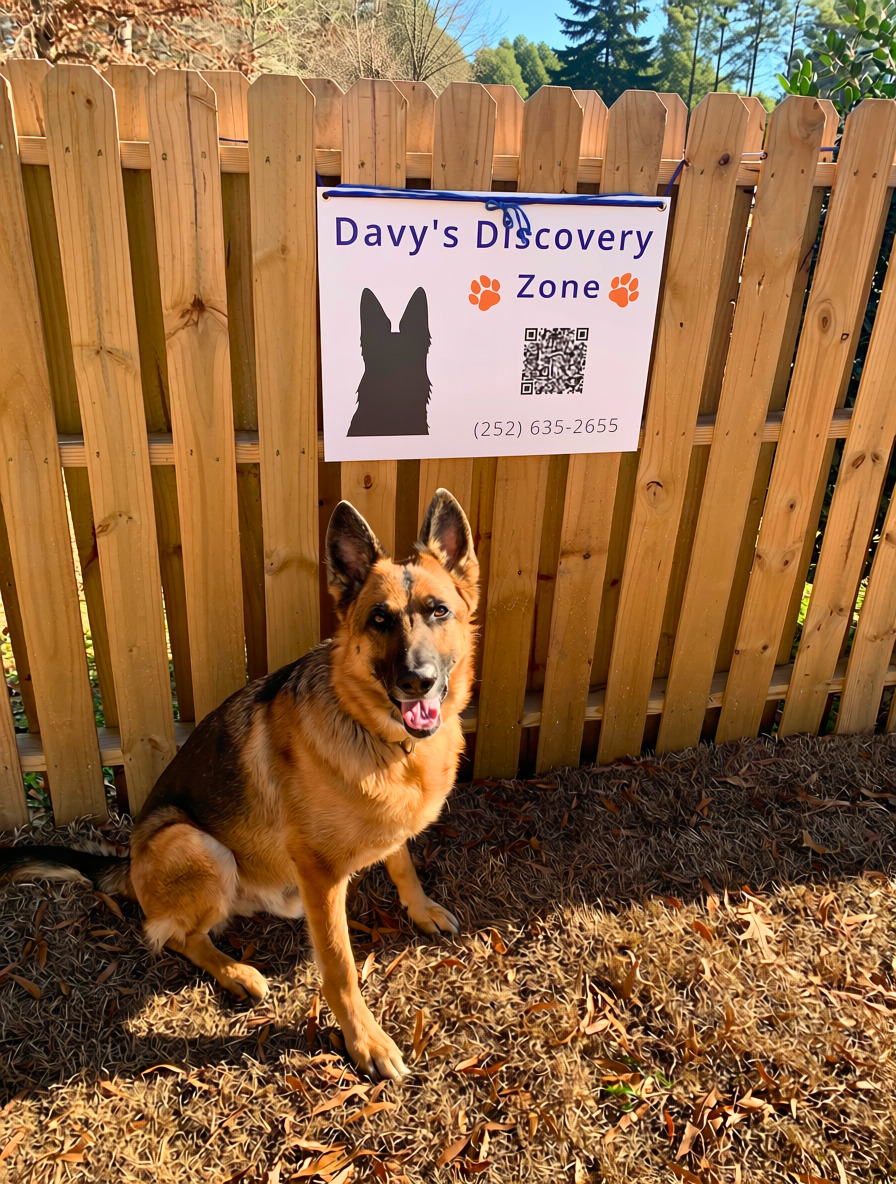
I'm Jeanne Crockett, owner of Crockett's Critter Care and a Fear-Free Certified Elite Professional Animal Trainer specializing in reactive-dog training in New Bern, NC. I've spent over a lifetime (since 1971) working with animals, but it was my own dog, Davy, who taught me the most about reactivity—and what actually works when you need help with a fearful dog.
This New Year, I want to talk about why your dog's "resolution" shouldn't be about them changing—it should be about you learning the skills to help them feel safe.
What Is Reactivity, Really?
Let's start with the truth: Reactive dogs aren't aggressive dogs. They're scared dogs.
Reactivity is your dog's way of saying, "I don't feel safe, and I don't know what else to do." It's not about dominance. It's not about being "bad" or "stubborn." It's about fear, frustration, or an overwhelmed nervous system.
Think of it this way: Imagine you're terrified of spiders. Now imagine someone forces you into a room full of them and tells you to "just calm down." You'd probably freak out, right? That's what it's like for a fearful dog when they're flooded with triggers they're not ready to handle.
The problem isn't the dog. The problem is that they don't have the tools to cope.
Here’s the hard truth: reactive dogs aren’t being “bad” or disobedient. They’re overwhelmed. When training focuses on commands or corrections without addressing the dog’s emotional state, it often adds more pressure—sometimes making the reactivity worse rather than better.
Why Traditional Training Can Miss the Mark with Reactive Dogs
Most dog training is about teaching tasks: sit, stay, come, heel. And for a lot of dogs, that works great.
But reactive dogs don't need more commands. They need to feel different about their triggers.
Let me explain with what I call the candle analogy.
Think of it like candles. You light one candle, and it generates heat. That's a trigger—maybe a cat outside the window. But what you might not see are all the other candles already burning. The deer that walked through your yard last night. The beeping smoke detector. The neighbors talking on the other side of the fence. Each one is another candle adding heat. People think, 'My dog just doesn't like other dogs.' But it's not just one thing—it's all those candles stacked together that make your dog react. What do we do in training? We snuff out as many candles as we can.
In some training circles, the goal is to stop the behavior at all costs. They hold onto outdated beliefs, which include the use of prong collars, shock collars, or physical leash corrections. These methods may temporarily quiet a reaction, but they don’t address the underlying emotions. Instead, they often light more candles—more fear, more stress, more anxiety.
As a positive reinforcement dog trainer in New Bern, I do something different.
We use things the dog genuinely values: treats, toys, movement, scents, and exploration, to change the association between a trigger and how the dog feels about it.
How Positive Reinforcement and Fear-Free Training Actually Work
Fear Free training is based on one simple principle: Change how your dog feels, and the behavior will follow.
Instead of punishing your dog for reacting, we teach them to associate their triggers with good things through positive reinforcement. It's called counter-conditioning, and it works.
Here's what that looks like in practice:
1. We Figure Out What Triggers Your Fearful Dog
Is it other dogs? People? Skateboards? Cars? We need to know what lights the fuse.
2. We Keep Your Dog Under Threshold
This is critical. If your dog is exploding, they can't learn. So we work at a distance where your dog can still think, take treats, and stay calm. We call this staying "under threshold."
3. We Pair the Trigger with Something Your Dog Loves
Every time your dog sees their trigger and stays calm, they get something amazing—usually high-value treats like chicken or cheese. Over time, their brain starts to make a new connection: "Oh, another dog? Cool. That means I get chicken!"
This is positive reinforcement at its core—teaching your dog that good things happen when they make better choices.
4. We Build Confidence at Home First
A lot of reactivity starts at home: barking at the door, lunging at windows, reacting in the yard. We tackle those behaviors first, before we ever hit the streets.
5. We Teach You Emergency Cues
"Let's go" to disengage. "Find it" to scatter treats on the ground and redirect. These cues save you in real-world moments when things don't go as planned.
This process takes time. Most dogs need 8 sessions to see real, lasting change. And I’ve seen it work time and time again.
Meet Abby: A Reactive Dog Training Success Story in New Bern
Let me tell you about Abby.
Abby's family couldn't even get her out of the front door without a meltdown. She reacted to everything: dogs on walks, dogs behind fences, the mail truck, neighbors talking, yard workers, cats, and kids playing.
Every walk was a battle.
Today, Abby is a completely different dog. Her family walks her multiple times a day—something they never thought would be possible. She's calm, relaxed, and actually enjoys her walks.
What changed? Patience. Consistency. And positive-reinforcement training that helped her feel safe instead of scared.
Abby's transformation wasn't magic. It was the right approach, applied consistently.
Fearful Dog Help in North Carolina: Why This Matters for You
If you're reading this, chances are you're exhausted.
You're tired of avoiding walks. You're tired of feeling embarrassed. You're tired of wondering if your dog will ever be "normal."
Here's what I want you to hear: Your dog can change. But only if you have the right tools.
This New Year, instead of hoping your dog will magically improve, commit to learning the skills that will actually help them. Commit to understanding what they're feeling. Commit to showing up for them in a way that makes them feel safe.
That's what reactive dog training is really about. It's not about obedience. It's about healing.
This Month's Special Offer
If you've been thinking about reactive dog training in New Bern but haven't taken the leap, now's the time.
Introductory Offer: Clients who book an 8-session reactive dog training package may also choose to add a customized ACE Free Work Starter Kit to support their dog’s progress in between sessions.
Why 8 sessions? Because real change takes time. You'll learn how to keep your dog under threshold, read their body language, use counter-conditioning and positive reinforcement, and give them the tools to feel safe in the world.
And the ACE starter kit? That's your at-home enrichment toolbox. ACE Free Work is a calming, confidence-building activity that helps reactive dogs decompress between sessions. It's been a game-changer for my clients and for Davy.
Let's Talk: Reactive Dog Training in New Bern, NC
Reactive dog training isn't a quick fix. It takes commitment. But if you're ready to put in the work, I'll give you the tools that can transform your dog's life—and yours.
I offer a free Discovery Call to make sure we're a good fit. No pressure. Just a conversation about your dog, what you're struggling with, and whether this training is right for you.
Ready to get started? Call me at (252) 635-2655 or email crockettscrittercare@gmail.com to schedule your Discovery Call.
Let's make this the year your dog learns to feel safe—and you learn to feel confident.
Jeanne Crockett
Fear Free Certified Elite Professional Animal Trainer | Canine Reactivity Specialist | Positive Reinforcement Dog Trainer
First ACE Free Work Trainer in North Carolina
Crockett's Critter Care | New Bern, NC